Squashed Part 1: Spiced Maple Apple Cider

Books:
Squashed by Joan Bauer
1996, Orion Children’s Books
A Time to Keep by Tasha Tudor
1977, Rand McNally & Company
autumnleavesHappy Autumn!   I’m sorry it’s been such a long time since my last post!  I recently got a new job which is keeping me terribly busy and tired.  Too tired to really enjoy many of the delights of my favorite time of year.  But just because I can’t do everything I want to this Fall, it doesn’t mean I can’t do the most important things.

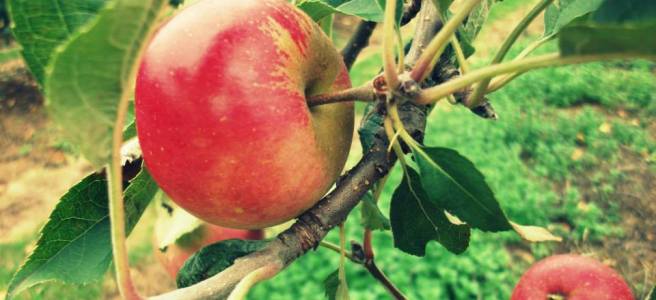
apple tree 2squashedUndoubtably my most reread book of all time is Squashed by Joan Bauer.  I read it every October.   This is obviously a book for somewhat older children and teens.  It deals with a lot of the issues of young adulthood, but in a very lighthearted and humorous way.  The protagonist is Ellie Morgan, a 16-year-old girl in a small town in Iowa, whose dream is to grow a giant pumpkin big enough to win first prize at her local fair.  Along the way she has to deal with a father who doesn’t understand her ambition, her struggle with her weight, the death of her mother, pumpkin thieves, and competition with her rival giant pumpkin grower, the “deeply despicable” Cyril Pool.  It’s nice to have a well-written female protagonist with such a specific and unusual passion as pumpkin growing.
sqashed2

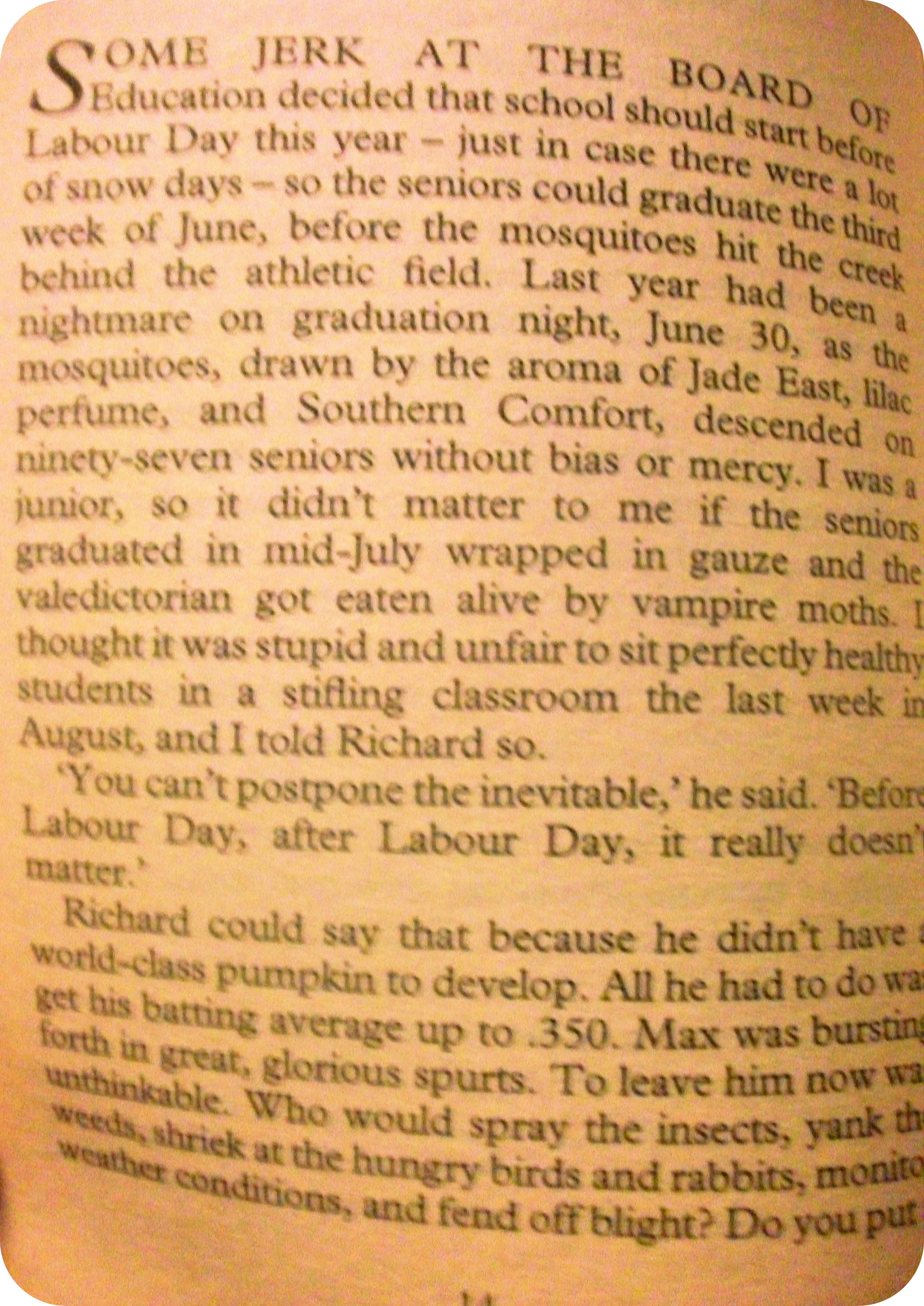
The novel begins in August, with forty-six days to go until the annual Rock River Pumpkin Weigh-In and Harvest Fair.  I’m not sure how accurate the descriptions of giant pumpkin growing are (do people really feed their squash buttermilk?), but the writing is incredibly engaging and funny, particularly when Ellie is talking about her pumpkin, Max:

Noble Max, whose ancestors sustained the Pilgrims through their first winter in America.
That first winter must have been a bust, and you can bet the pumpkins weren’t appreciated right off.  Vegetables never are.  The Pilgrim children were probably crabbing by December (‘Oh no, pumpkin again!’), never realizing a pumpkin had all those disease-fighting nutrients and was a key dietary staple since it was too big to be lugged off the settlement by wild, rabid bears.  It just goes to show you that even ancient people couldn’t appreciate something right under their noses, which is probably why the Pilgrims went extinct.  There’s a lesson here for all of us, especially my father.
(p.15)

Ellie is also a great cook, and there are lots of descriptions of food to choose from: Irish soda bread slathered in plum preserves, butter pecan seven-layer cake, baking powder cheese biscuits, split pea soup with sausage, and sautéed cinnamon apples.

However, since this last weekend was our local Apple Day,  I’ve got a big thermos full of fresh apple cider to use up: the ultimate October treat.  Cider is always a sensitive subject for me, since here in the UK you cannot find cider in the American sense.  “Cider” is alcoholic cider.  They have imported the Pumpkin Spice Latte, but not the Caramel Apple Spice…and I don’t like coffee!  Misery!

ciderThe good news is that if you can get yourself to an Apple Day there will no doubt be someone with an apple press squeezing out delicious, unpasteurized, unfiltered apple cider.  I usually wait a day for it to ferment just a little, and then it’s time to enjoy it — hot, cold, mulled.

apple day

spices
Spiced Maple Apple Cider

Ingredients
Spices to taste: cloves, nutmeg, allspice, star anise, ginger, cardamom
Cinnamon stick
1/2 cup extra-thick or whipped cream (optional)
2 pints fresh apple cider (or cloudy apple juice if you can’t find it)
1 tsp vanilla
1/2 cup maple syrup

Method
Pour the syrup into a medium hot pan with a dash of water.  Add the vanilla.  If your spices are whole, crush them slightly with a pestle or something heavy.  You can add them to the pan as they are, or put them in a tea ball and then add.  Finally, pour in the cider and bring to a simmer.  Strain into a jar.  If your spices are in a tea ball you can continue to steep them.  When cool enough to drink, top with whipped cream if desired.
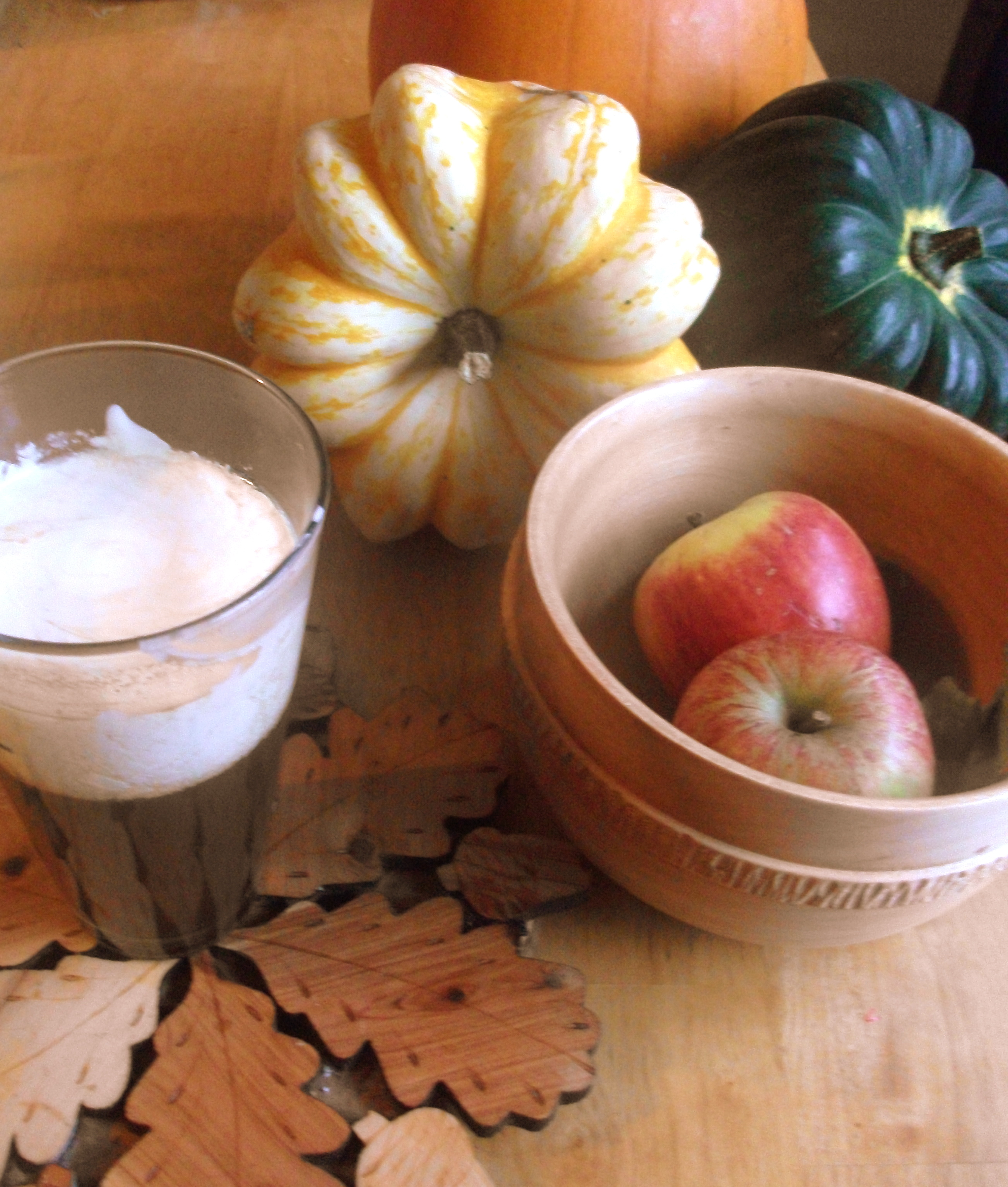
DSCF2051Enjoy hot in the most cozy fashion you can manage! 
shopping apples
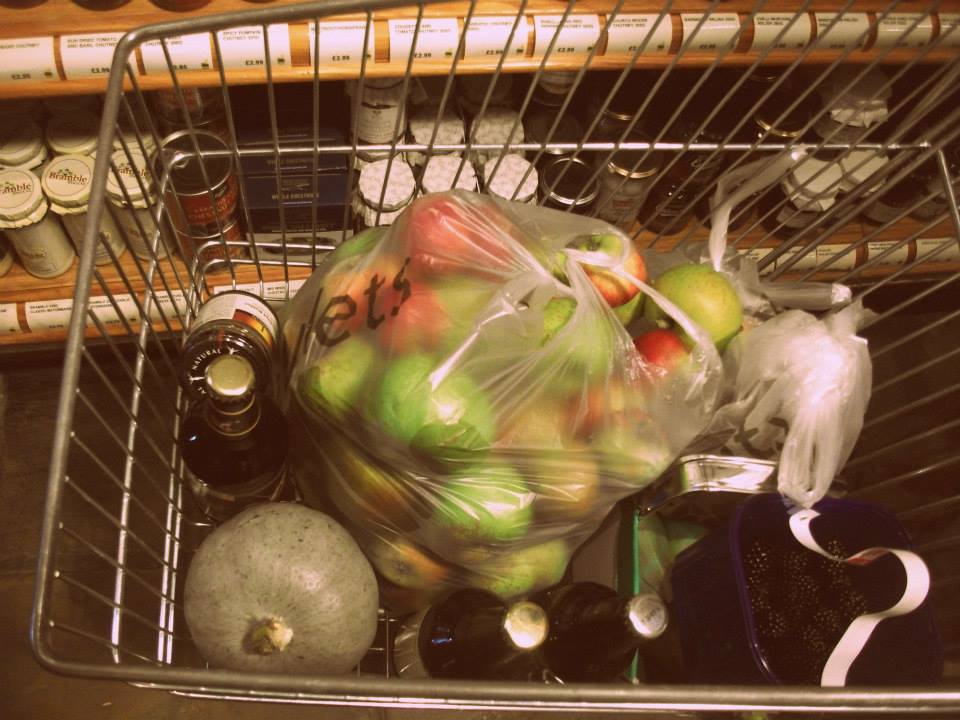
This October, see if you can find an Apple Day, visit an orchard or a PYO farm, or go scrumping for wild apples!

A Time to Keep‘s October section shows how little the wholesome activity of cider-making has changed:

ttkmaking cider

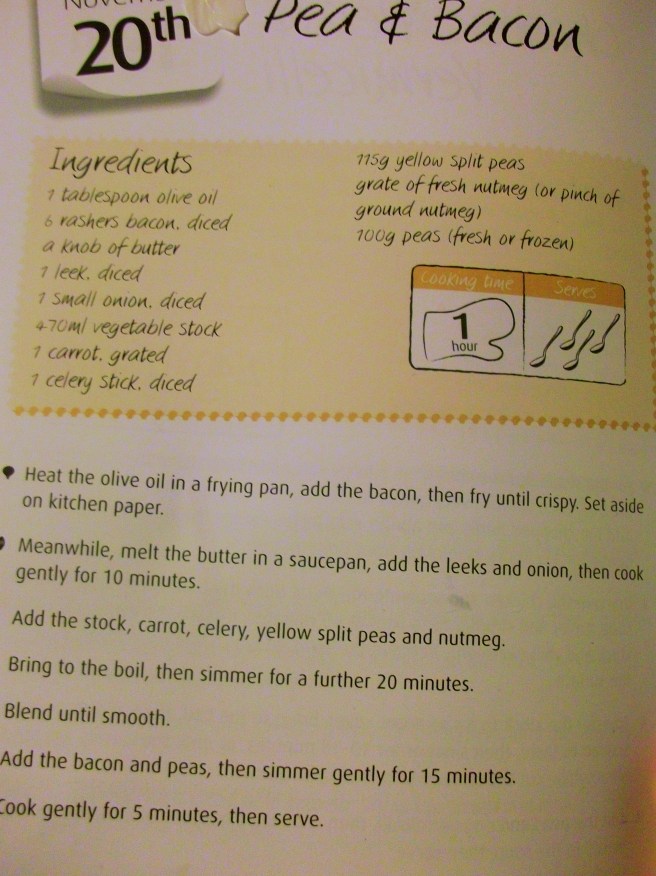
apple treeTo add to the coziness, my husband made a split pea soup.  Not with sausage, like Ellie’s, but still warming and hearty.  He used this recipe, from a book we got last Christmas:
ttkapplebobbing
Looking forward to Hallowe’en! Who has a costume picked out?


Best of British Summer 2015

Poem:
The Owl and the Pussycat by Edward Lear

One thing that we do a couple of times a year is what we call Best of British.  This started one day years ago when we were in a pub.  We saw that they were having a little food festival called Best of British.  But it was rather expensive.  I said, “I could make us all that for a lot less!”  So I did, and we’ve been doing it ever since.  Anyone could do it with their local cuisine, and it’s a lot of fun if you like to cook.  Here is this Summer’s menu.

menus

bob2015starterAs you can see the first one is quince-themed, and as we’ve been talking about “The Owl and the Pussycat”, we read that poem at dinner (sorry about the ham, Pig Robinson).  It’s one of the more accessible Lear poems, and has a lot of fun wordplay and evocative imagery.  It’s also very easy to memorize.

Here is a recipe for the piccalilli, which is a nice old-fashioned pickle.

Easy Piccalilli

Ingredients
1/2 Tbsp vinegar
3 Tbsp mustard powder
1 Tbsp whole grain mustard
1/2 Tbsp sugar
3 tsp garlic paste
1/3 of a zucchini (courgette), diced
1 onion, diced
1 sweet pepper, diced,
1 carrot, diced
1 cup broccoli & cauliflower, broken into florets

Method
Put the mustard, vinegar, garlic and sugar in a pan and simmer .  Add the vegetables and allow to soften only slightly.  Then take off the heat and allow to cool, stirring now and then. Store in a jar in the fridge.

Eat with quince and dance by the light of the moon!

pr5
From The Tale of Pig Robinson


The Tale of Pig Robinson: Clotted Cream Truffles

Book:
The Tale of Little Pig Robinson by Beatrix Potter
1987, F. Warne, New York NY, USA.

beach

Goodbye Summer!

We didn’t have a very hot August, which is a shame, because I find it is so much more fun to look forward to Autumn when there is a nice transition between heat and crispness.  But since it’s still reasonably warm, I thought we could fit in one more summery read.

The Tale of Little Pig Robinson is quite unusual for a Beatrix Potter book. It is quite long (123 pages), and a chapter book.  The setting is based upon her own seaside holiday in a little harbour town.  The structure is also unusual.  The story begins with a cat named Susan who goes down to the harbour to get herrings.  We learn her history, and the history of Stumpy the dog.  Susan sees a pig on the deck of a ship and wonders how he came  to be there, but the narrative follows her home.  The next passage is very evocative:

Sam ate his supper and smoked a pipe by the fire; and then he went to bed. But Susan sat a long time by the fire, considering. She considered many things—fish, and ducks, and Percy with a lame foot, and dogs that eat mutton chops, and the yellow cat on the ship, and the pig. Susan thought it strange to see a pig upon a ship called the “Pound of Candles.” The mice peeped out under the cupboard door. The cinders fell together on the hearth. Susan purred gently in her sleep and dreamed of fish and pigs. She could not understand that pig on board a ship. But I know all about him!  (p.25)
tidepoolThe narrator then explains that this story is a prequel to “The Owl & the Pussycat” by Edward Lear, which explains how the pig that they meet at the end of the poem came to be there:When that pig was little he lived in Devonshire, with his aunts, Miss Dorcas and Miss Porcas, at a farm called Piggery Porcombe. Their cosy thatched cottage was in an orchard at the top of a steep red Devonshire lane.”(p.26)  The next section of the story is a very long and detailed description of journey which the pig, whose name is Robinson, makes to market at Stymouth, and his misadventures trying to run errands there.   The details are charming in a historical context and useful to get a feel for another place and time period, however, it is so long and dense that I think it would make it a trying read for a young child…it was a little trying for me.  It might be better for 8 and up if they had an adult to help contextualize and learn about the historical vocabulary with them.

Another thing to keep in mind with Pig Robinson is that there are a few scenes and themes that could be upsetting to a sensitive child.  The text baldly states of Robinson’s aunts that their end was bacon.  The odd situation of anthropomorphic animals living independently amongst humans and yet still being eaten is a feature of many Potter books, but it is rarely so directly addressed.  Also, Robinson’s journey though town is somewhat scary, with someone yelling “Come in, fat pig!” from a pub, and him seeing a ham in a window.

The other sensitive aspect is that this is basically the story of a child being kidnapped.  Robinson’s aunts warn him to stay away from “ships’ cooks, and pantechnicons, and sausages, and shoes, and ships, and sealing-wax” (p.33) but in town Robinson is offered snuff by a strange sailor.  Apparently Robinson’s one fault was that he could not say no, so instead of saying ‘no thank you’ and going straight away, he ends up being lured onto the ship by the sailor (who, as it transpires, is a ship’s cook!), and which point it sails off.  There is a rather sinister scene of various people who might have recognised Robinson and saved him being distracted by other things and not noticing.  On the other hand, it would be a good opportunity to have a discussion about safety, the importance of being able to say no, and what to do when we first start going places on our own.

pr3

However, the story is not so dark that Robinson is mistreated on the ship, thankfully.  He is treated well and fed a lot (we can guess where this is going, but Robinson doesn’t, even though the ship’s cat tries to warn him). The cat itself is the one from “The Owl and the Pussycat”, who is upset on being separated from the owl.

Eventually Robinson overhears that he is meant for the Captain’s birthday dinner — as the main course!  At this point the cat helps him to escape in a boat.  It is a shame that the adventure only really gets going right before the end, but this section is quite exciting and also well-written, as the author describes the tropical seas with their phosphorescence, and the moon like a silver plate.

When Robinson gets to the island, he finds a rather fantastical scene.

pr4

Acid drops and sweets grew upon the trees. Yams, which are a sort of sweet potato, abounded ready cooked. The bread-fruit tree grew iced cakes and muffins, ready baked; so no pig need sigh for porridge. Overhead towered the Bong tree. (p.120)

truffs3

According to the narrator the island is very like the one in Robinson Crusoe, only without its drawbacks.  The Owl and the Pussycat visit it (for their wedding, as described in the original poem) and later Robinson is visited by some dogs from Stymouth who find him disinclined to return.  So there is a happy ending.

buoy

As you can see this is a pretty strange book.  You can check it out here, if you’d like to see for yourself.  However I would still recommend a look, particularly for older children who might enjoy searching for the various references to other works.  There are a couple of references to the nursery rhyme about this little piggy (one goes to market, two stay home…although there is no reference to roast beef), and Robinson himself goes “Wee! Wee! Wee!” all the time.  Obviously it is a prequel to “The Owl and the Pussycat” which also ties in Robinson Crusoe (Robinson refers to himself as “Pig Robinson Crusoe” at one point, so possibly Robinson Crusoe the book already exists in this universe).  Finally, there are a couple of mentions of shoes, ships, sealing wax, etc., in what must be a reference to “The Walrus and the Carpenter.”  It’s amusing to think of this story as some kind of unified theory of pigs/desert islands/ships.

Pig Robinson was quite a greedy pig, and he really liked sweets, so I thought I would make truffles (although chocolate truffles probably are not good for pigs).  I found this recipe, and adapted it a little to make it more fantastical.  It suits the playful nature of the story.

ganache1
Clotted Cream Truffles

Ingredients
1 1/2 cups clotted cream
1 1/3 cup dark chocolate (70% cocoa solids), crushed into smallish pieces
1/2 cup shredded (desiccated)  coconut

ganache

Method
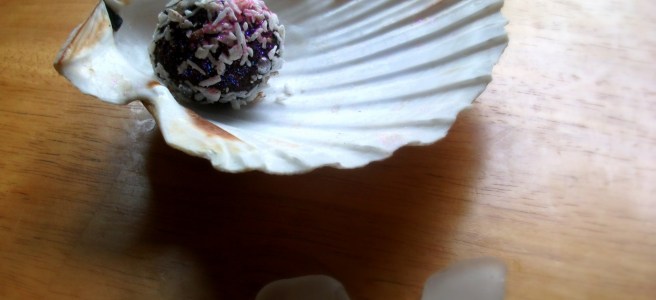
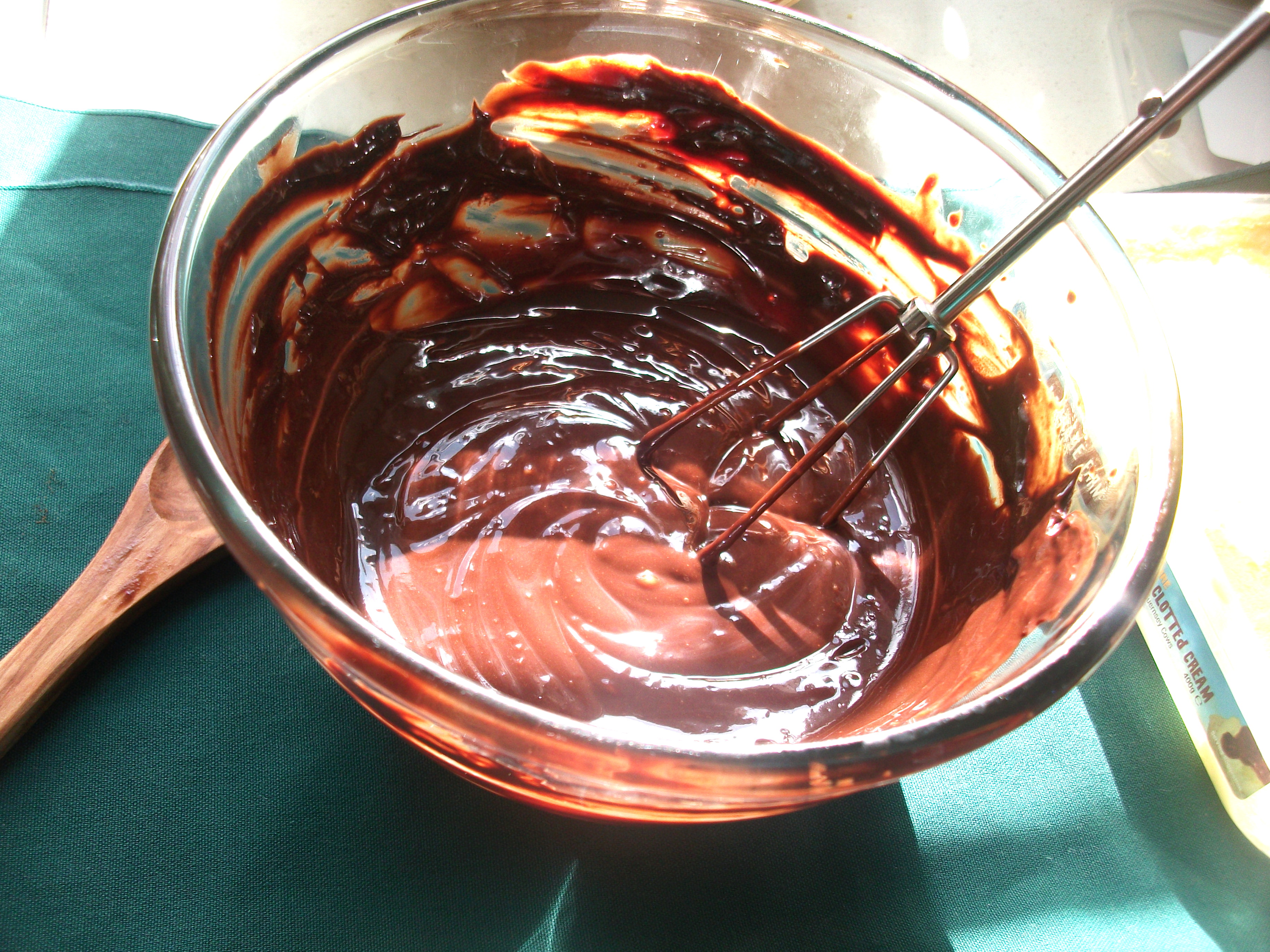
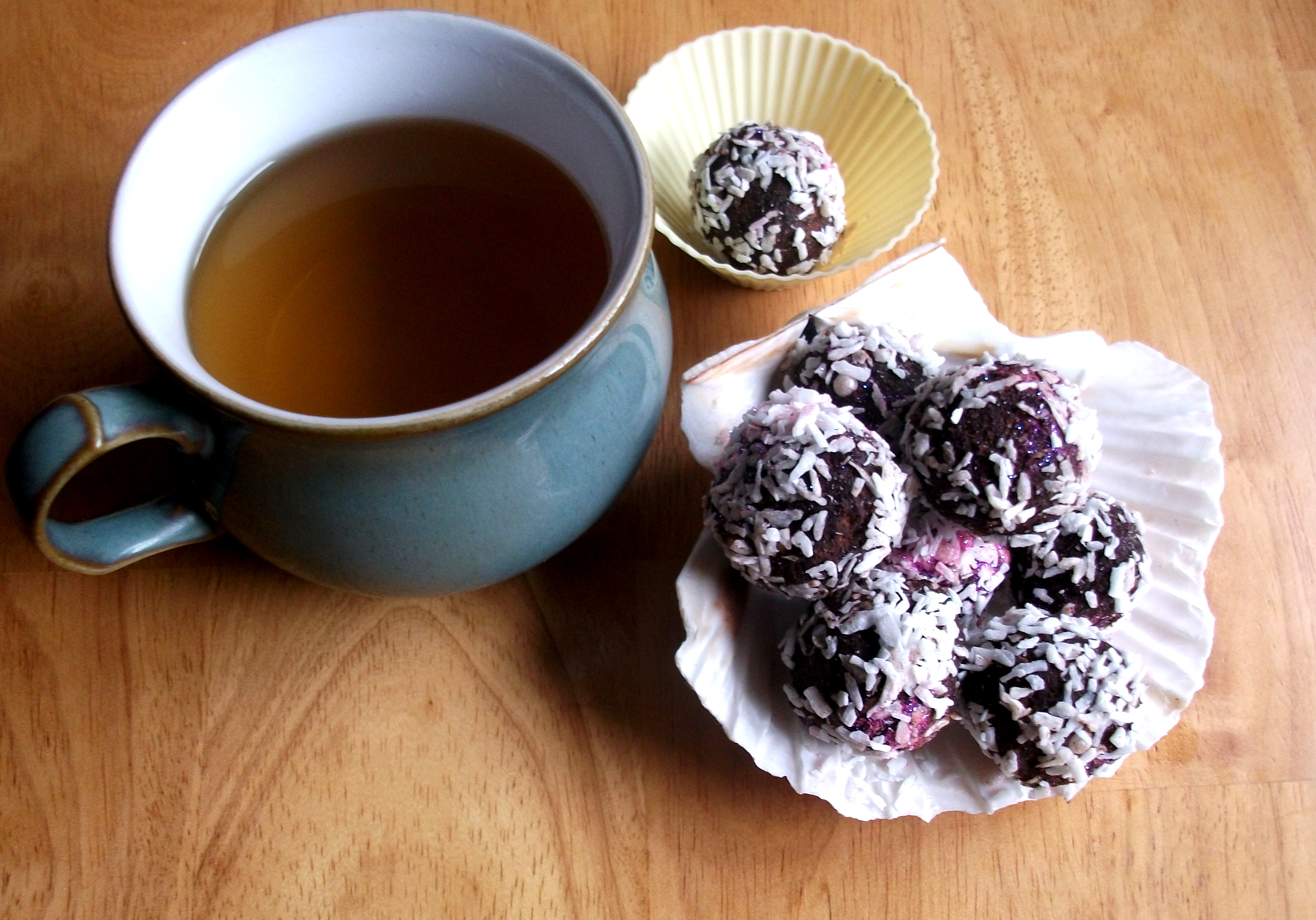
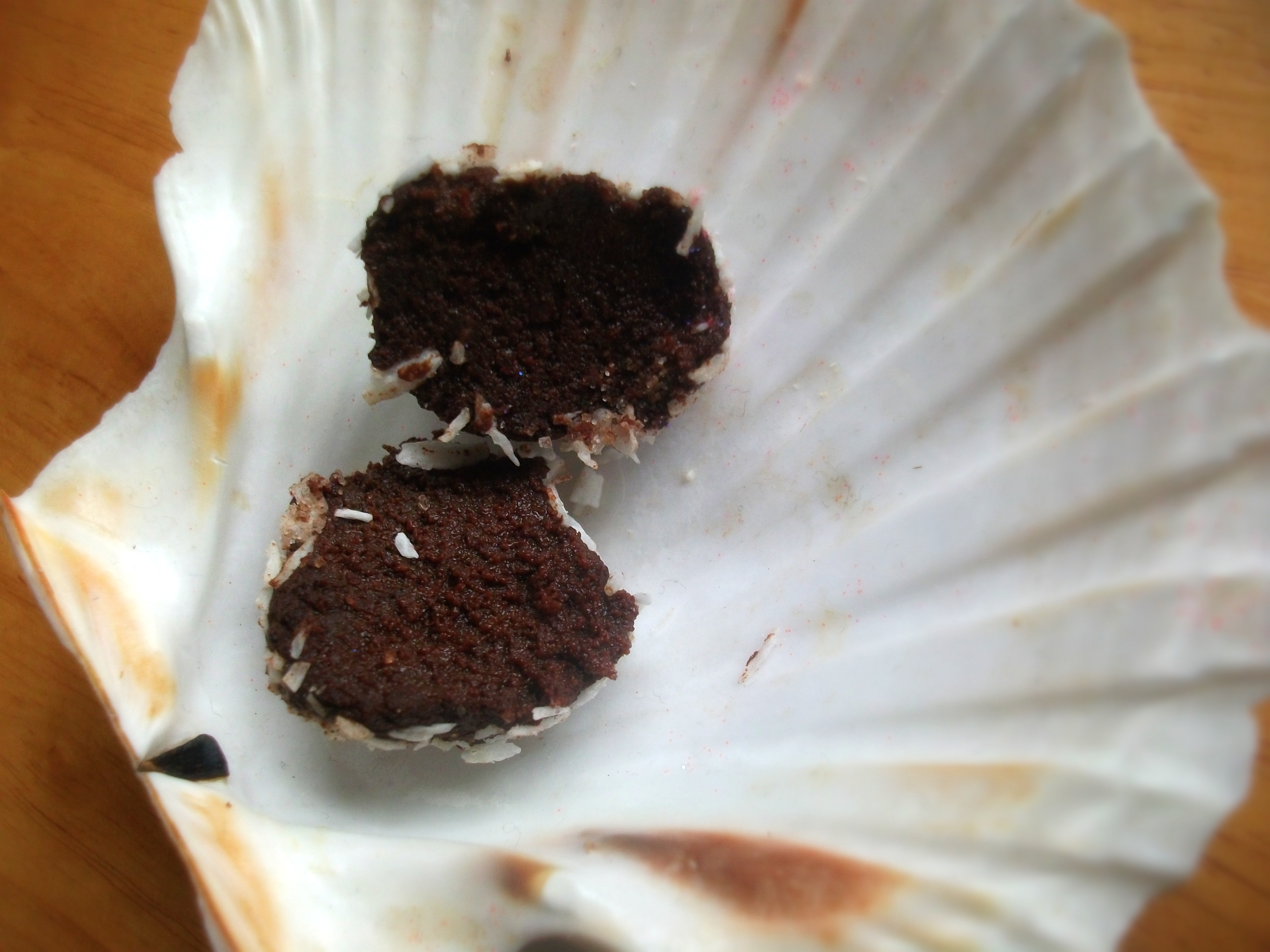
Melt the chocolate slowly in a bain marie or microwave.  I put it in a Pyrex bowl and put the bowl in a pan of simmering water.  Stir the clotted cream into the chocolate and chill in the fridge for at least 3 hours.  Then take out tablespoonfuls of the ganache and roll into balls, then roll them in the coconut.  You could use cocoa powder, powdered (icing) sugar or any other topping of choice instead.  I also put on some pink edible glitter powder to evoke the colourful  setting of Robinson’s island.  Chill again for another 3 hours.
truffs1truffs2
Enjoy with the last of the warm weather!


1 is One: Lemon Curd

Book:
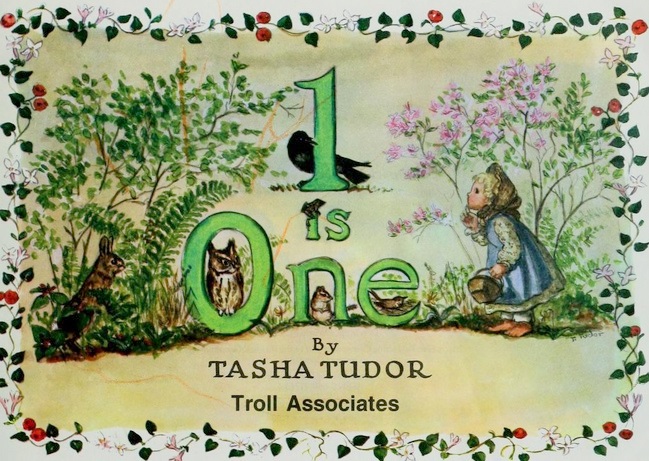
1 is One by Tasha Tudor
1986, Aladdin Books, New York.
1isone1
Last Friday (August 28th) would have been Tasha Tudor’s 100th birthday, so I thought we’d have a cream tea on the weekend and read some of her books.
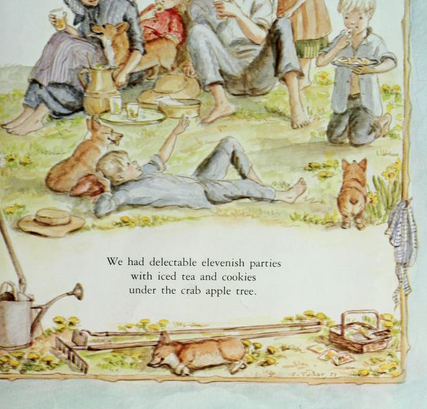
Tasha and her family were very much into having iced tea in the garden.


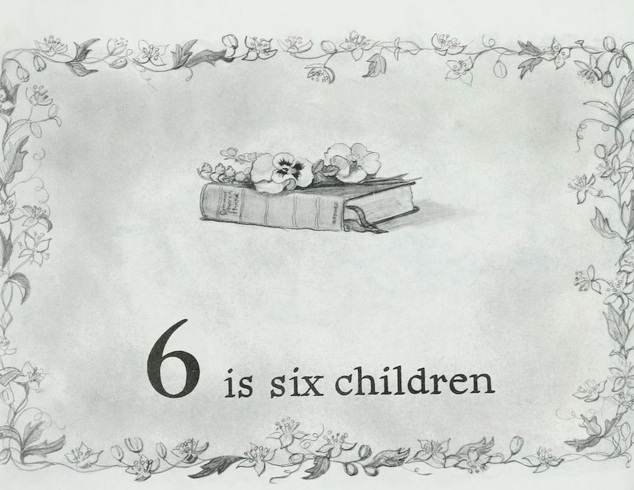
But we need some reading material.  1 is One is a little rhyming counting book.  It would be great for very young children, and useful for learning how to count 1 -20.


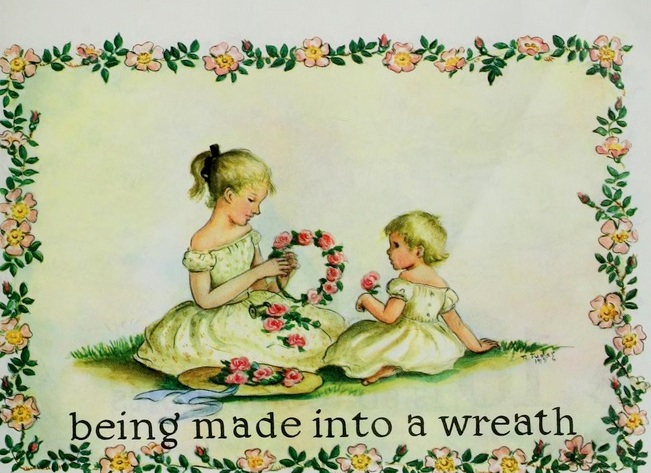
Adults and children alike can appreciate the beautiful and detailed illustrations, in both color and black and white.  The subjects of the pictures are simple and relatable.
1isone5


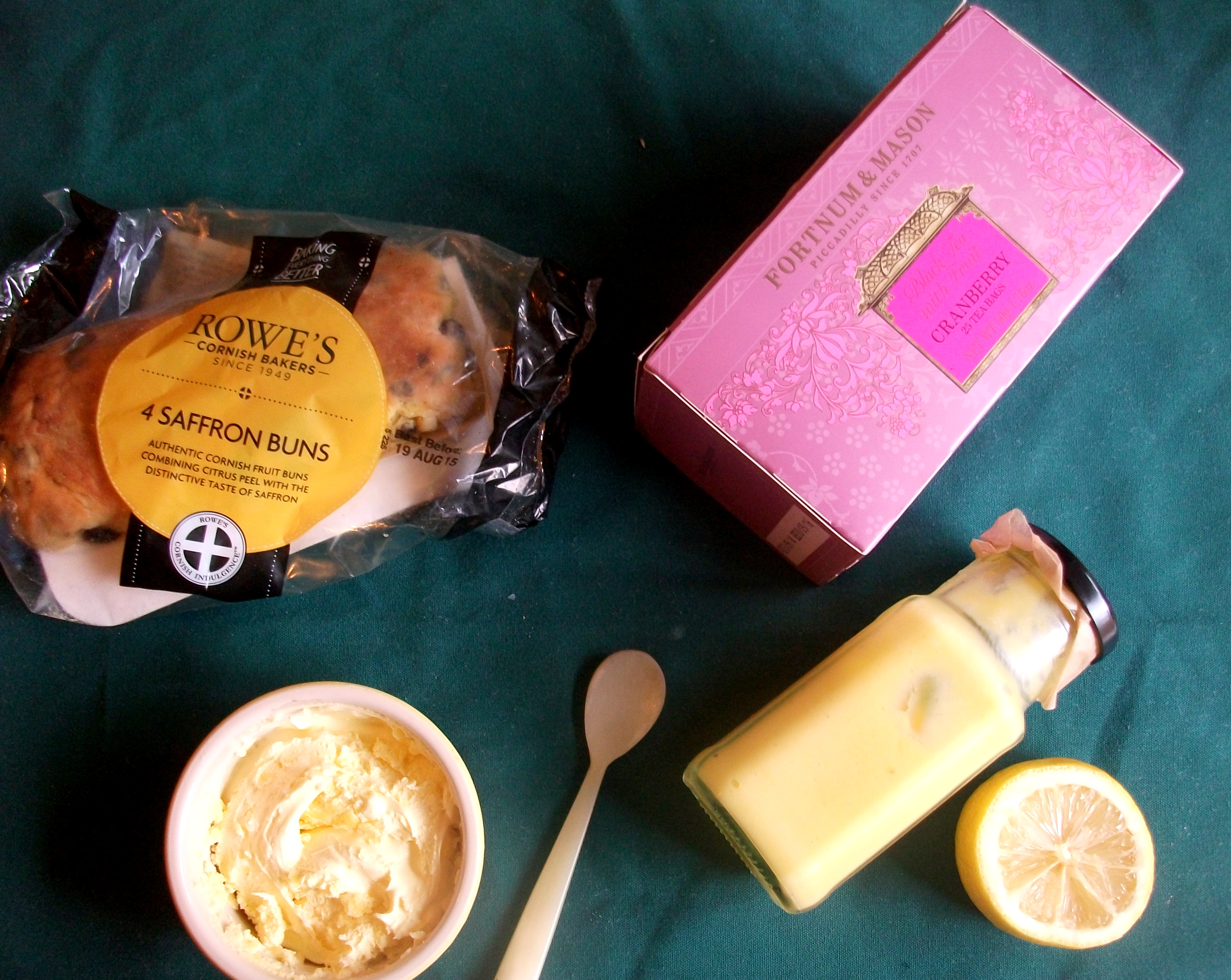
For our Tasha Tudor tea, we had iced tea, saffron buns, clotted cream and lemon curd.  I made a fancied-up version of iced tea to go with the occasion.
icedteaingredients
Iced Tea

Ingredients
2 fruity black teabags or loose tea in a tea ball
1 lemon
2 Tbsp honey or sweetener of choice
4 fresh mint leaves

Method
Add hot water to teabags.  Let steep for 5 minutes, then add sweetener to taste (you could use sugar, honey, or stevia.).  Cut the lemon into slices, and add the slices and a squeeze of lemon juice, as well as the mint leaves. Pour into a large jug, adding cold water to fill, and leave in the fridge for at least 4 hours.

icedteaingredients2

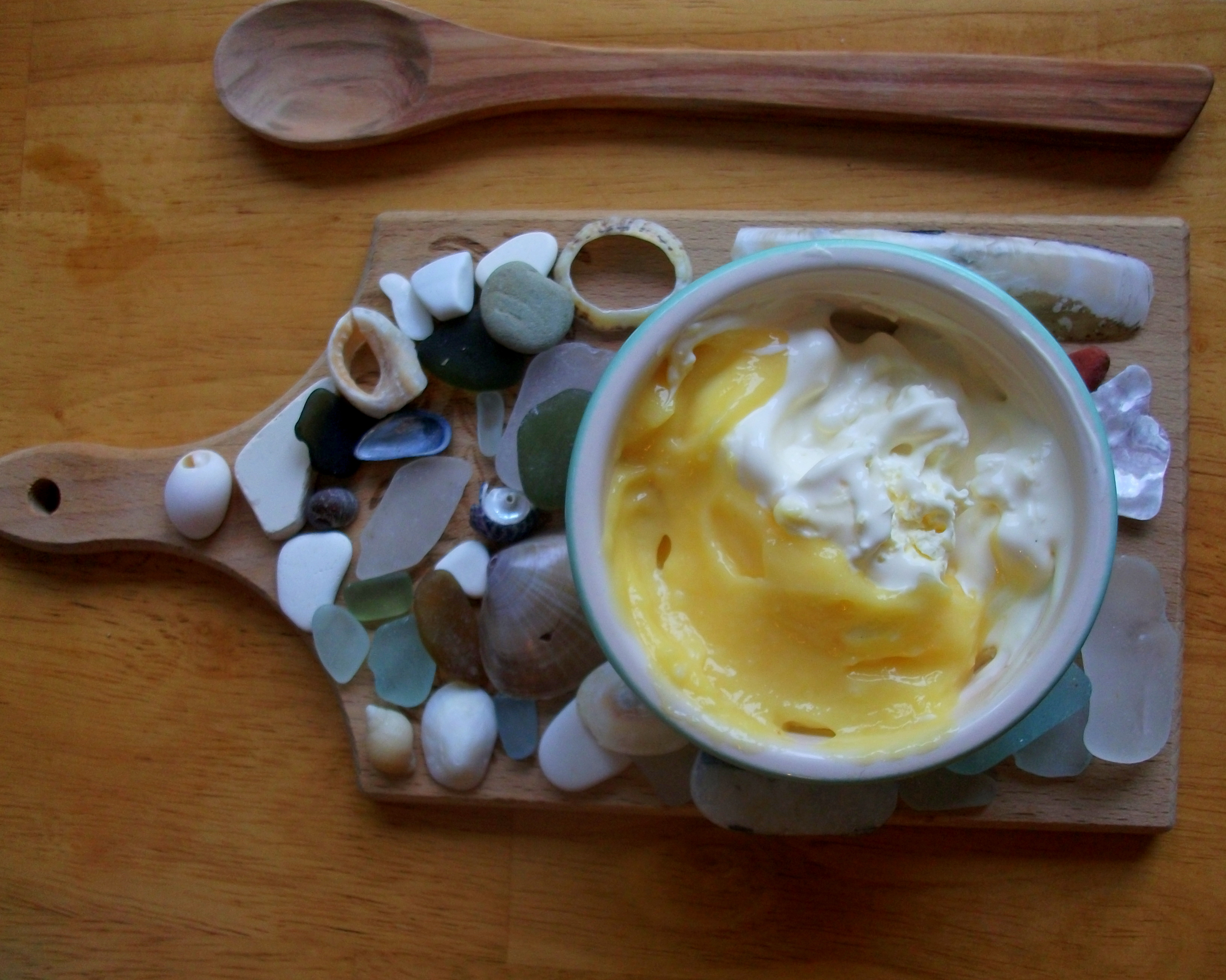
For the lemon curd I used this recipe, but roughly halved it.  I’m the only one in my house who eats dairy so it often makes sense not to make too much!

Lemon Curd

Ingredients
1 egg
1 egg yolk
2.5 Tblsp lemon juice
2 Tblsp butter
⅓ cup sugar
1 tsp lemon zest

lcurdmix
Method
Whisk together all the ingredients in a metal or glass bowl.  Place the bowl over the top of a pot or pan of water and bring to a simmer, whisking frequently to prevent curdling.  It may take about ten minutes.  Eventually the mixture will thicken enough to coat the back of a spoon. Add the butter and whisk well.  Transfer to a clean jar and store in the fridge.

lcurd3
Assemble your tea and eat in the garden (under a crab apple tree if you have one).  Hopefully it will be a delectable elevenish party!

Also read: A Time to Keep.

1isone6

Two in a Tent: Clotted Cream

Book:
Two in a Tent by Molly Brett
1969, The Medici Society Ltd., London.

book & picnic
I’ve been away for a while, partly due to busyness, but also because we went on holiday!  We rented a car and drove down to North Devon, where we stayed in a tent.  When it came to what book to bring, Enid Blyton was a little too obvious, so I brought along Two in a Tent.

two in a tent in a tent
Two in a Tent in a tent!

beach1
Two in a Tent  would be suitable for children of all ages.  It tells the story of Susan, who goes to visit her cousin David in the country.  They are allowed to sleep in a tent in the orchard by his house, they encounter lots of animals (which Susan invariably either misidentifies or is afraid of), and they even have an adventure when the orchard floods.

My copy evidently once belonged to a small child with an orange crayon.

beach4

Susan and David learn a lot about the animals they encounter.  The text includes a lot of information, so that it could be very useful in a unit about animals, biology, ecosystems, the countryside, etc.  It was published in 1969, so some of the information is not correct (don’t give hedgehogs milk!  And don’t take in baby deer!), but much of it is still factual, and the illustrations are extremely accurate.  Molly Brett’s artwork manages to be sweet, whimsical and yet almost scientific.  On the back cover of my edition, there is a guide to some of the birds and flowers in the book, if you have not identified them already.

two in a tent2

We two in a tent did some of the things David and Susan did (although we spent most of our time at the beach).  We didn’t make our own fire, but we did cook sausages.

We didn’t go on a “midnight march” (although we meant to), and I for one really enjoyed the “hot baths and supper” we had when we came home!

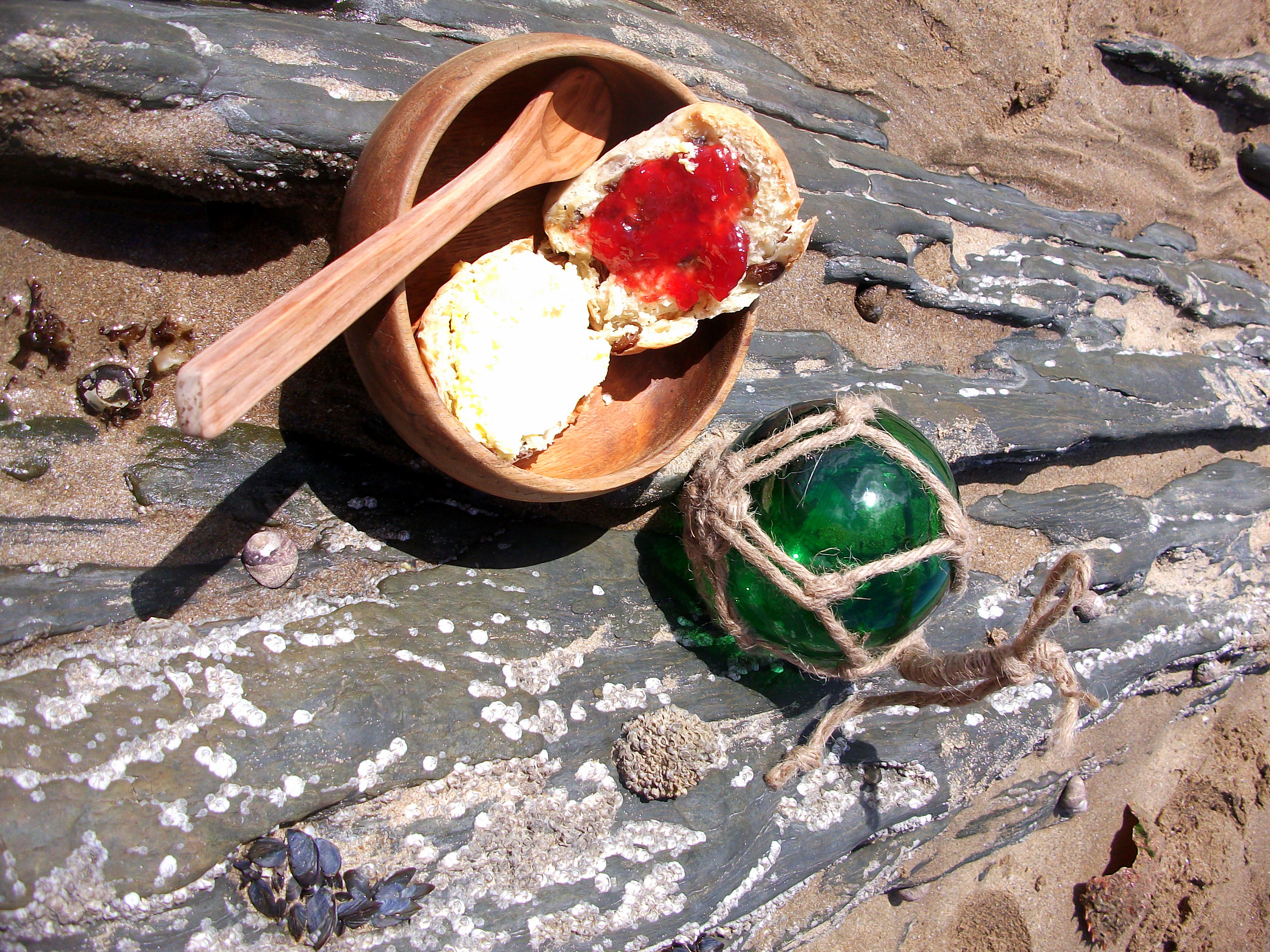
In Devon I was excited to buy copious amounts of clotted cream, which we had with yeast buns and jam.

beach picnic1

beach picnic2clotted creamOnce home, I was looking forward to using it in various ways.  However, I’m not sure how easy it is to find clotted cream outside the UK.  You could use extra thick double cream instead,  or shake double cream in jar for a couple of minutes until it thickens up, but it wouldn’t be exactly the same, so I thought I would put up a recipe for those of you who can’t get ahold of it.  Clotted cream is traditionally made by heating cream on very  low heat for a long time.  I looked around and found this recipe, which uses a slow cooker.  Ingenious!  I cut down on the amount of cream, because I already have two big tubs of clotted cream in the fridge!

beach picnic3
Slow Cooker Clotted Cream

Ingredients
3 cups heavy or double cream

Method
Pour the cream into the slow cooker and leave on low or warm for 8 – 10 hours.  It is a tricky business because you do not want the cream to go above 180 degrees F (82 degrees C).  My slow cooker tends to be quite hot, so I left it on warm.  Then, transfer the whole thing to the fridge (you don’t want to disturb the crust on top of the cream!) for at least 4 hours.  When it is chilled, scoop off the top layer, which should be thick, not runny.  I found that there was still some runny cream, but it tasted fine, so I scooped it all into a dish and then added the crust part of the cream back on top.


Done!
Done!

After a few more hours of chilling, the cream should all set up to proper thickness.

Enjoy in a traditional cream tea with scones and jam, or eat with a spoon (that’s what I did!).

cream&curd1
Lemon curd recipe to follow another day!


DSCF1786
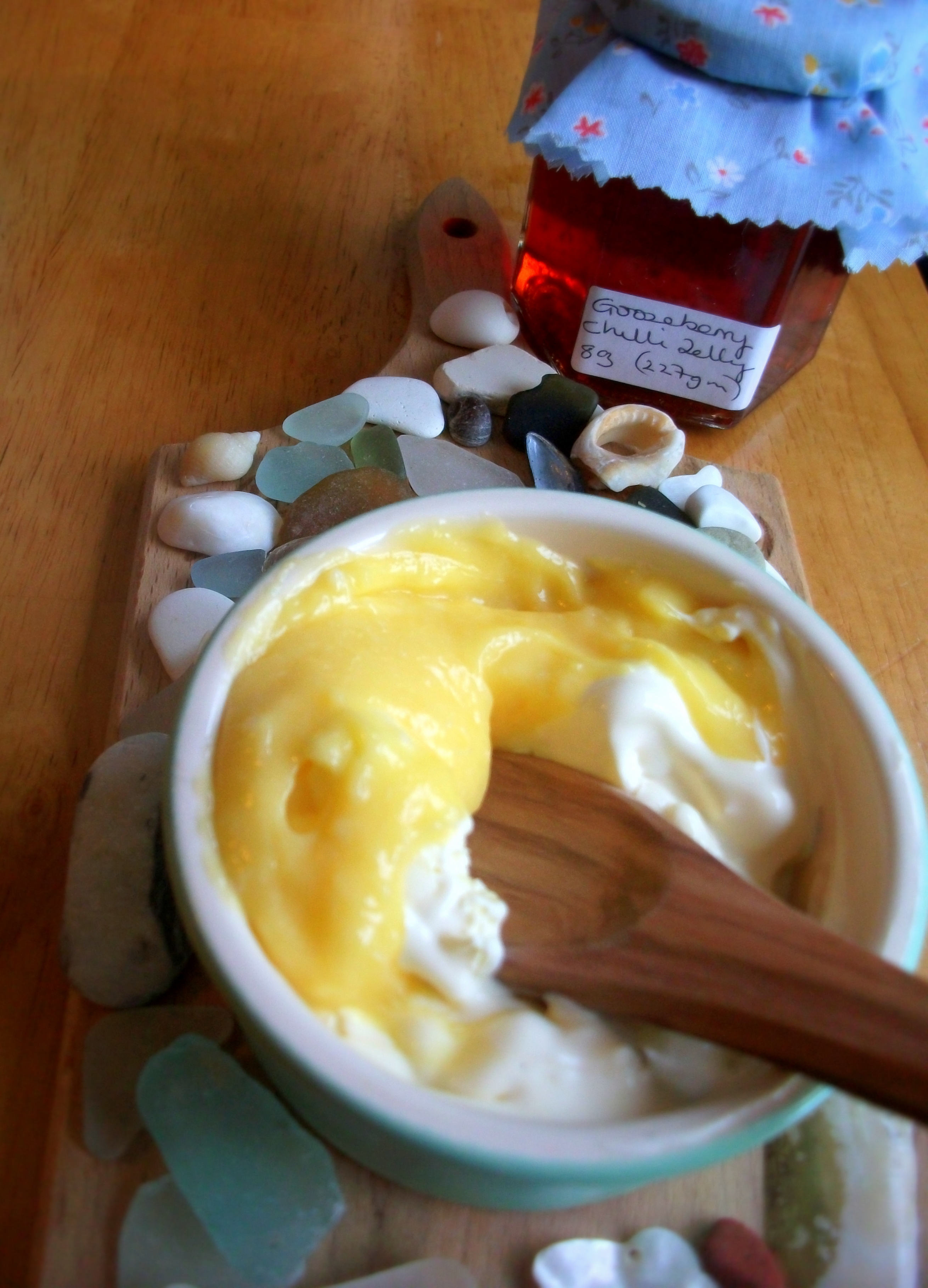
Jelly from Indicknowle farm in Devon

Even if you don’t have an orchard, if you have a bit of garden, sleeping out in the tent is a fun activity for kids and adults.  You could make a fire and cook some sausages, and have a “midnight march”.  And if you can’t get to the beach, you could always set up a paddling pool!

backyard pool beach5